
Showing posts with label gardening. Show all posts
Showing posts with label gardening. Show all posts

Succulent habitats
 Succulent plants are found everywhere, from tropical regions to the arctic circle. They are, however, less common in the areas where frost occurs in winter months. The greatest number of succulents grows in subtropical and tropical zones. Although succulents can occur in dry habitats, in real deserts they are rare. Only the toughest species can grow there, and then only in the hollows or rock crevices, where they can find some moisture. Fog or dew can be a source of water for these plants which have become adapted to it, but the true desert is too arid for any plant life.
Growing Yucca tree inside
Yucca tree originates from America, where it thrives both in drier and wetter places of the country. You can find them in lowlands, dry beaches, rocky deserts, mountains... There are more than 40 different species of yucca trees and they are famous for their sharp leaves.

Replanting is not necessary, but the smaller yuccas can benefit from replanting once in two years, or you can replant your yucca when it outgrew current pot.
You can control the way you yucca grows by trimming offsprings and bigger branches. If you want to grow more yuccas from trimmed branches, place them into water. When roots appear you can plant them in pots.
My experience Currently I have four yucca trees in my home. They are the least demanding of all of my plants. When you get yucca pick the place in your home which is sunny and out of the way, and don't move it, they don't like to be moved. Too much and too little watering can make yuccas leaves turn yellow, so be careful. My yuccas are inside in the winter and on the terrace from spring to fall. When I bring them out, I keep them from the direct sun for some time, until they adjust to new conditions. Last summer they got sun burns on the leaves, so in the hottest parts of the day, they are in the shades. Not everyone lives in same conditions so you need to watch your plants needs. Something that works for me, maybe will not work for you.
Yuccas grows really slow but with right care, they will be center point of your home for many years.

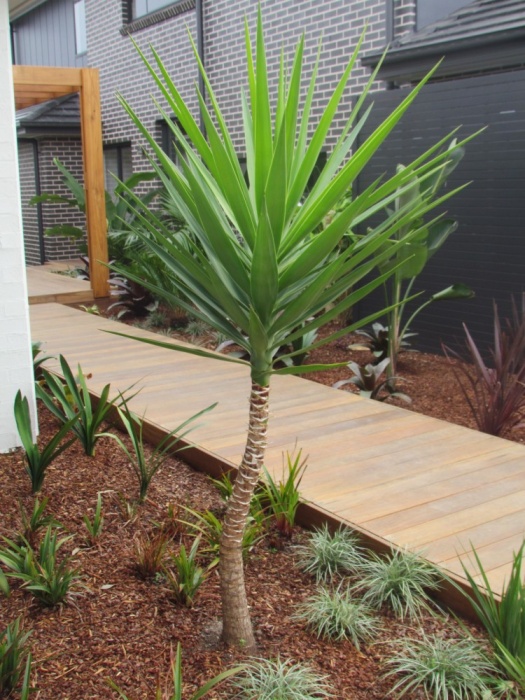


Yucca elephantipes is the type that is usually grown as a houseplant. They can grow up to three meters high.
Care Yuccas are very easy to maintain, they don't need much attention, but they require plenty of sunlight. Best placement for yucca is a southern window. Lack of the sunlight will reflect on the growth of the plant. In the summer yucca need to be watered two to three times a week, and in the winter only once a week. It is desirable to feed your yucca once a month in the time of growth, which is from spring to fall. From time to time, it is desirable to clean yuccas leaves from dust and filth. You can use a wet mop or you can shower the whole plant.
Replanting is not necessary, but the smaller yuccas can benefit from replanting once in two years, or you can replant your yucca when it outgrew current pot.
You can control the way you yucca grows by trimming offsprings and bigger branches. If you want to grow more yuccas from trimmed branches, place them into water. When roots appear you can plant them in pots.
My experience Currently I have four yucca trees in my home. They are the least demanding of all of my plants. When you get yucca pick the place in your home which is sunny and out of the way, and don't move it, they don't like to be moved. Too much and too little watering can make yuccas leaves turn yellow, so be careful. My yuccas are inside in the winter and on the terrace from spring to fall. When I bring them out, I keep them from the direct sun for some time, until they adjust to new conditions. Last summer they got sun burns on the leaves, so in the hottest parts of the day, they are in the shades. Not everyone lives in same conditions so you need to watch your plants needs. Something that works for me, maybe will not work for you.
Yuccas grows really slow but with right care, they will be center point of your home for many years.
Yucca aloifalia
Yucca elephantipes
How to care for Philodendron hederaceum
Philodendron hederaceum is also called heartleaf philodendron, sweetheart plant or just philodendron. It is native to Central America and the Caribbean. They grow in humid tropical forests. Philodendron is clambering plant that can grow 3 to 6 meters. It has heart shaped leaves that are deep green color. Sometimes when the plant matures they flower white flowers.


How to save a rotting cactus
 A few days ago I noticed that one of my cactuses started to rot. He was in the same pot with two other
 cactuses which are the same as him, but they looked fine. I didn't water them, so I don't know why he started to rot. I removed him from the pot, with his roots, and realized that the bottom part of the cactus with roots is rotten. I took a clean kitchen knife and cut off the rotten parts. If you ever have this problem with your cactuses, always use a clean knife or scissors, you don't want any bacteria on your plant. After removing rotten parts, I left my cactus to dry up by the window, because it's cold and the air is fresh. He's been there for a few days and the time has come to plant him in a new pot. Planting is the same as for any normal plant with roots. I placed him a little deeper in the soil so he can be stable. In this stage, he doesn't need watering. If you water him now he can rot all the way.
Development of the root may take few months. You can check if anything is happening by gently touching your cactus, and feeling if he is taking roots. If he is formed roots you can water him.
Fingers crossed that he will be fine.


Ferns as houseplants

5 Low maintenance plants
1. Sansevieria
Indoor plant, special for its fleshy straight long leaves, which depending on the species differs in patterns and colors. Maintenance is not demanding. Able to withstand direct sunlight, but also can be in the shades. It does not like high humidity in the air and can stand close to the radiator.

Indoor plant, special for its fleshy straight long leaves, which depending on the species differs in patterns and colors. Maintenance is not demanding. Able to withstand direct sunlight, but also can be in the shades. It does not like high humidity in the air and can stand close to the radiator.
How to grow a European Fan Palm
 European fan palm or Mediterranean palm is the only palm native to Europe. This palm can grow over a 1 meter high indoors. As the palm gets older, the trunk develops numerous sharp spines. The stem grows from the trunk at an upward angle and displays the stiff fan style fronds. Because it grows with a wide spread be prepared to have enough space unless you plan to move it outside.

How to care for a Euphorbia Trigona
Euphorbia Trigona is also called African milk tree because when you make some injury to the plant it
excretes milky fluid from the injury. It originates from Africa so it does not need a lot of water.
They tend to grow really high, so you should think about that when you plant your euphorbia.

excretes milky fluid from the injury. It originates from Africa so it does not need a lot of water.
They tend to grow really high, so you should think about that when you plant your euphorbia.

How to grow Lucky bamboo
Lucky bamboo is a very popular house plant. It is very easy to maintain because it requires almost no care. It is said that lucky bamboo brings good luck and good fortune to the inhabitants of
any space where it is grown.

any space where it is grown.

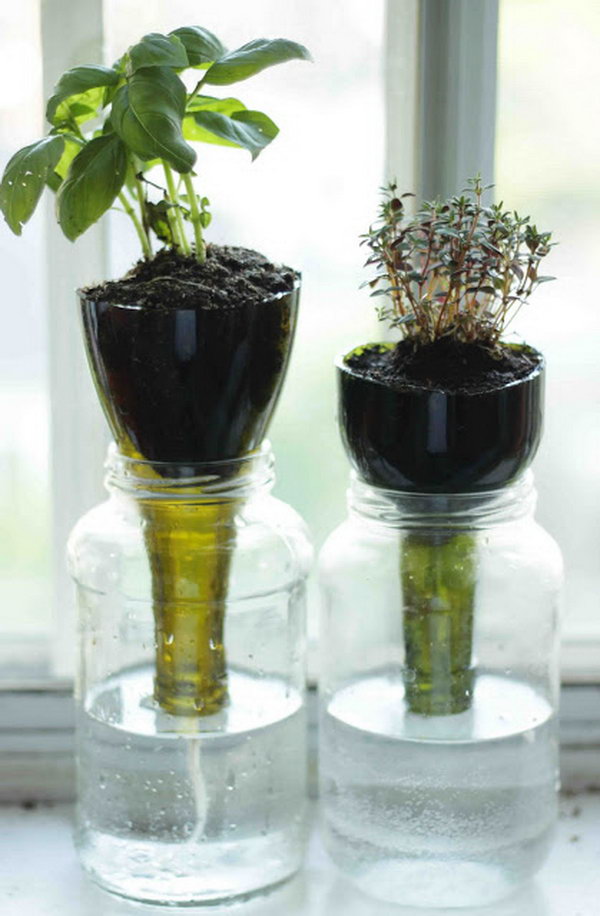


Ficus benjamina

Dracaena marginata
 Dracaena is a small tree or a shrub that can reach a height of 2 meters, although they tend to grow slowly. They have thin dark green leaves that are red on the edges. Dracaenas are not very demanding plants, so they will not take you too much time.
They don't need a lot of water. Leave the soil to dry between watering, because the roots can rotten from too much water. Although they like sunlight, don't place them in the direct sun. Strong sunlight can damage the leaves. The best is to place your plant in some place with half shadow. A couple of times a week you should spray your dracaena because they like when the air is moist.
You can get new plant if you cut one of the branches from your dracaena tree. Put that branch in the water and wait until roots grow then plant it.
Water palm - Cyperus alternifolius
 Water palms are very easy to maintain, anyone can have them. They can rise up to 1,5 meters. As they name says, they like water. The soil in the pot must be always wet, so you should water them every day. You can shower them from time to time. You can even plant them in the garden pond if you have one. They like a lot of sun, so put them close to a window.
If the leaves start to turn yellow, your palm probably needs more water. If they dry completely, you just need to cut out that stem.
Water palms grow very quickly. You can have more water palms from their leaves, you just need to cut the stem with the leaves, and put the end with the leaves in the water, and that part will produce roots.
Water palm can be a great addition to your home, and it's easy to maintain, just don't forget to water it.


This is mine water palm, she is over 1 meter high
How to plant date palm
You know those sweet treats that you can buy in the store, so when you eat them you can collect the seeds and plant them. In that way, you can get date palm.
 The first thing to do is to wash your date seeds. If you are planting more than one date in a single pot, make larger spaces because they have very large root. Maybe it is the best to plant them in separate pots. Place the seeds horizontally. It is best to mix normal soil with a little of sand. Dates need some time to start to grow. First, two or three years dates are growing really slowly, so be patient, its worth it.
In the summer they like a lot of sun and a lot of water and in the winter they can be in the cold room if they are big enough, and they don't need so much watering.
If you are patient and wait until your date plant starts to grow intensively you will have a beautiful palm tree.


In the summer they like a lot of sun and a lot of water and in the winter they can be in the cold room if they are big enough, and they don't need so much watering.
If you are patient and wait until your date plant starts to grow intensively you will have a beautiful palm tree.


2 years old, waiting for leafs to get bigger
How to plant pineapples
I know that it sounds strange, but it's very easy to plant a pineapple. You don't need seeds, only plain pineapple from the supermarket.
When buying a pineapple watch that his foliage is green and not dried, because that's the part of the pineapple that will grow into an exotic plant in your home.

All you have to do is to remove a leaf part of the pineapple from the part that you can eat. The leafs should not be pulled out, they should be twisted by hand. When you remove leafs on them should remain a small part of the pineapple. After that remove few rows of leaves from the bottom of the pineapple to expose the root hair that is located above the fleshy part. Then place the pineapple leafs in the glass with water, but in that way that only fleshy part with root hairs is in the water. Put your pineapple in a sunny place. Development of the root hairs may take several weeks. You need to change the water in the glass regularly. When the root hairs are developed enough you can plant your pineapple. You should water him once a week, and if the soil is too dry, more often. From my experience I know that pineapples don't like to be in direct sun in the summer, so you should keep him in half shadow, when the sun is too hot.
It may take years until your pineapple bear fruits but it's worth to wait.
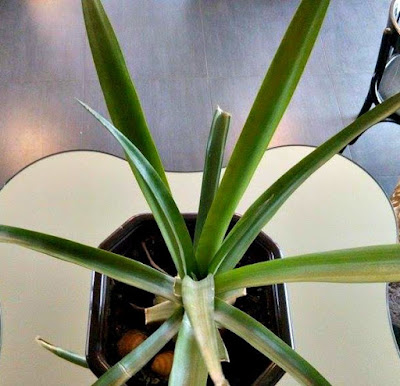
When buying a pineapple watch that his foliage is green and not dried, because that's the part of the pineapple that will grow into an exotic plant in your home.

All you have to do is to remove a leaf part of the pineapple from the part that you can eat. The leafs should not be pulled out, they should be twisted by hand. When you remove leafs on them should remain a small part of the pineapple. After that remove few rows of leaves from the bottom of the pineapple to expose the root hair that is located above the fleshy part. Then place the pineapple leafs in the glass with water, but in that way that only fleshy part with root hairs is in the water. Put your pineapple in a sunny place. Development of the root hairs may take several weeks. You need to change the water in the glass regularly. When the root hairs are developed enough you can plant your pineapple. You should water him once a week, and if the soil is too dry, more often. From my experience I know that pineapples don't like to be in direct sun in the summer, so you should keep him in half shadow, when the sun is too hot.
It may take years until your pineapple bear fruits but it's worth to wait.

Thats my 1,5 years old pineapple
How to plant lemons from seed
Growing your own lemon tree is really easy. You can find many articles on how to plant a lemon on the internet, I will write about my experience growing lemon from seed.
For growing you own lemon, you only need a seed from one. You can plant seed from lemons that you bought in a supermarket.
 Before you plant your lemon seeds you need to wash them in the water and let them dry. After washing you are ready for the first step in your process of planting a lemon. You should prepare the soil and a pot in which you want your lemon to grow. For start you don't need a large pot, you will replant your lemon once it starts to grow.
I planted several seeds in one small pot because I wanted to be sure that at least one lemon will grow. In the end, they all did. If the seed is healthy you can plant just one, lemon seeds sprout easily.
Once you prepared a pot with soil, I used soil mixture from the supermarket, you are ready for planting. Plant your seed 1 cm deep in a pot. Place your pot in a sunny place, and water it regularly. After two or three weeks your lemon will grow.

If you planted several seeds in one pot, and they all have grown, don't transplant them immediately, let them grow, you will figure out when they are ready for replanting.
In general, lemon is a low maintenance plant. It needs regular watering, in the summer every day, it likes to be in the moist soil. In the winter water it regularly, but not with so much water like in the summer. When the weather starts to be colder, bring your lemon inside. One more thing it likes is a lot of sunlight. If you have conditions, keep your lemon on a direct sunlight as much as you can. It can't get enough sun.
In right conditions, lemons grow fast. Lots of water and sun and you will get a tree in no time.
One more thing you should know, when you are growing your lemon from seed, it needs to be grafted, it will not bear fruit otherwise. You can graft your lemon once it is two years old, and it will start to bring you fresh lemons. Grafting is done with a branch from any citrus which bears fruit.
If your plant starts to lose it's leaves in the winter and you are doing everything right, don't worry, it is completely normal. You can wait until spring to prune it or you can do it right away. New leaves will start to grow soon. I pruned my lemon several times because I want it to grow like a bush. If you want for your tree to grow in heights, prune it's side branches, or don't prune it if it isn't necessary.
Hope you find this article helpful, and if you thought that planting a lemon is hard, I trust that I reassured you. Even if you don't get fruit immediately you will have an exotic fragrant plant that will brighten your home.

For growing you own lemon, you only need a seed from one. You can plant seed from lemons that you bought in a supermarket.
 Before you plant your lemon seeds you need to wash them in the water and let them dry. After washing you are ready for the first step in your process of planting a lemon. You should prepare the soil and a pot in which you want your lemon to grow. For start you don't need a large pot, you will replant your lemon once it starts to grow.
I planted several seeds in one small pot because I wanted to be sure that at least one lemon will grow. In the end, they all did. If the seed is healthy you can plant just one, lemon seeds sprout easily.
Once you prepared a pot with soil, I used soil mixture from the supermarket, you are ready for planting. Plant your seed 1 cm deep in a pot. Place your pot in a sunny place, and water it regularly. After two or three weeks your lemon will grow.
In general, lemon is a low maintenance plant. It needs regular watering, in the summer every day, it likes to be in the moist soil. In the winter water it regularly, but not with so much water like in the summer. When the weather starts to be colder, bring your lemon inside. One more thing it likes is a lot of sunlight. If you have conditions, keep your lemon on a direct sunlight as much as you can. It can't get enough sun.
In right conditions, lemons grow fast. Lots of water and sun and you will get a tree in no time.
One more thing you should know, when you are growing your lemon from seed, it needs to be grafted, it will not bear fruit otherwise. You can graft your lemon once it is two years old, and it will start to bring you fresh lemons. Grafting is done with a branch from any citrus which bears fruit.
If your plant starts to lose it's leaves in the winter and you are doing everything right, don't worry, it is completely normal. You can wait until spring to prune it or you can do it right away. New leaves will start to grow soon. I pruned my lemon several times because I want it to grow like a bush. If you want for your tree to grow in heights, prune it's side branches, or don't prune it if it isn't necessary.
Hope you find this article helpful, and if you thought that planting a lemon is hard, I trust that I reassured you. Even if you don't get fruit immediately you will have an exotic fragrant plant that will brighten your home.
Subscribe to:
Posts (Atom)